What the category usually sees
- Like probability
- Reply probability
- Conversation volume
- In-app engagement
A Note For Overtone
I keep coming back because the goal is clear: use AI to help people form real relationships, not spend more time inside another app.
Why this exists
I know the open roles are senior. I am not pretending otherwise.
What I can offer is range, energy, and appetite for the work small teams always have too much of: user conversations, synthesis, coordination, experiments, and follow-through.
I can start full-time in June and stay through September. After that I have one semester left. If there were fit, I would want to keep going part-time in the fall and full-time after graduation.
So this page is a better introduction than a resume. It shows what I pay attention to and how I like to work.
Why this resonates with me
Before I made this page, I was already working on a separate project called ActiveCrew. It started with sports, but the deeper problem underneath it was broader: too many people want more real life than they are actually getting.
Working on it pushed me away from discovery and toward follow-through: what helps someone actually show up, what makes a plan feel safe enough to say yes to, and what makes a good intention die before anything happens.
That is one reason Overtone caught my attention so quickly. The product is different, but the human problem is adjacent.
Why the direction makes sense to me
Most products in the category learn from easy signals: likes, replies, and time in app. Useful, but shallow.
The harder signal comes later: who follows through, who actually meets, and what happens after. From the outside, Overtone seems aimed at that layer. That is what caught my attention.
I am not claiming to know your roadmap. I am saying the public direction makes sense, and I would like to work around a team pushing on it.
What the category usually sees
What feels more meaningful to me
Where I would start learning
How do you reduce friction between a good introduction and an actual plan without making the product feel scripted?
What tells you someone is ready to meet now rather than just browse?
After a date happens, what is the lightest feedback loop that improves the next introduction?
Why I think I could be useful
I would be most useful close to the product, close to users, and close to the work that keeps the learning loop honest.
Run interviews, structure feedback, and pull out patterns the team can act on.
Track where interest turns into action, or drops.
Keep questions clear and learning loops grounded.
Listen for where the story lands and where it does not.
Work I have already done around this problem
Because Overtone is still private, I did not want to guess. So I worked through Hinge, the closest public product reference point, and through ActiveCrew, where I have been dealing with adjacent problems myself.
Hinge research work
I worked through Hinge users who were relationship-minded but stuck between matching and actually meeting. The three themes were match-to-meet friction, authentic self-expression, and trust in the algorithm.
Open segment analysisHinge feature work
Out of 13 feature ideas, the strongest one attacked the biggest leak in the funnel: too many promising conversations die before a date ever happens.
Open feature workI also pulled the thinking together in one longer note.
What building ActiveCrew taught me
ActiveCrew started as a social-sports idea. Very quickly it became a coordination problem.
It forced me into the same practical questions: availability, confirmation, trust, no-shows, ratings, and how much structure people need before something actually happens.
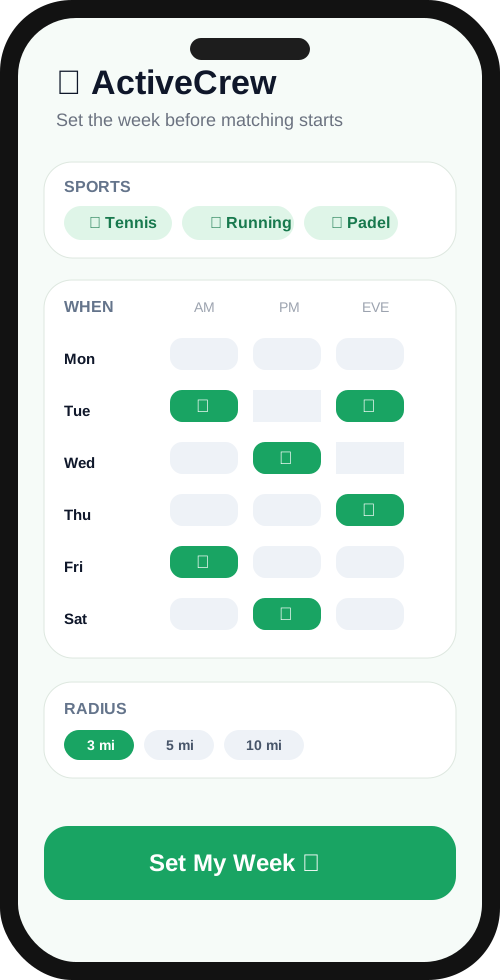
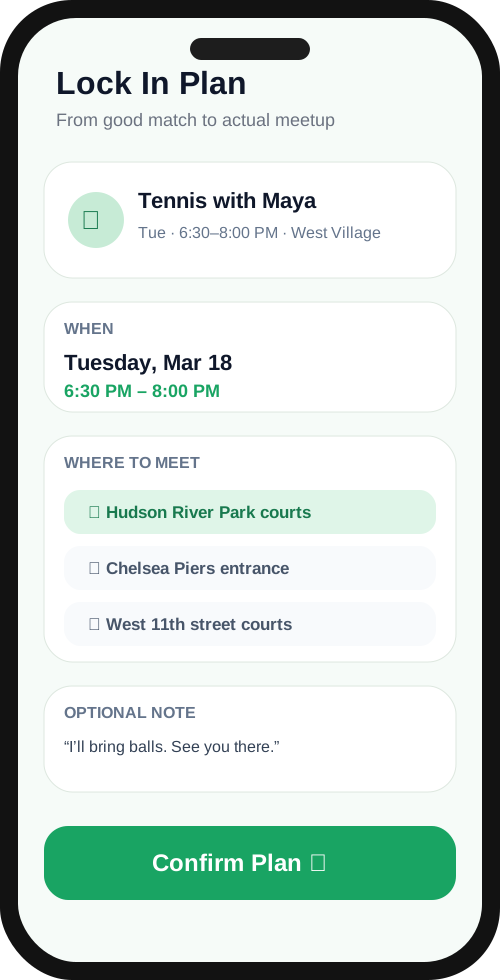
These are simple on purpose. They show where my head goes when I build: toward the point where a real plan either happens or dies.
Video
Planned format: 75 to 90 seconds, one camera shot, one clear argument, one ask.
The video is there to make the page feel human, not to repeat it.
Direct contact